SLOW FOCACCIA
Soft, airy, deeply golden Focaccia with Roasted Garlic, Olive Oil, Rosemary & Sea Salt
THE RITUAL
A simple dough worth learning by heart. Mixed entirely by hand and strengthened through a series of gentle folds, it needs no mixer and no traditional kneading.
This is also a wonderful foundation dough to know. Use it for focaccia, shape it into pizza, or adapt the same method with an active starter to make a naturally leavened sourdough version.
Make it in an afternoon, or tuck it into the refrigerator overnight when that better suits your day.
SERVES 6–8
INGREDIENTS
For the dough
500 g Tipo 00 flour, preferably suitable for pizza or bread
425 g lukewarm water
6 g fine sea salt
6 g instant dried yeast, preferably from a freshly opened packet
25 g Soleá Ritual extra virgin olive oil
To finish
Soleá Ritual extra virgin olive oil — generously, for the pan, finishing & dipping
Fresh rosemary
Flaky sea salt
METHOD
1. Mix the dough
Add the yeast to the dry flour. Stir gently with your hand to disperse into the dry mixture.
Add the room temperature water and mix with your hand until all the flour has been incorporated and no dry patches remain. Don't worry about making it smooth. At this stage, the dough should look rough, shaggy mixture and feel quite sticky.
Cover the bowl and leave to rest for 20 minutes.
After 20 minutes, add the salt into the mixture. With a wet hand, gently pinch, fold and work them into the dough until incorporated.
Cover and rest for another 20 minutes.
2. Begin the folds
Wet your hands well before touching the dough.
Reach underneath one side, gently stretch the dough upwards and fold it back over itself. Turn the bowl and repeat, working your way around the dough.
Cover and leave to rest for 20 minutes.
Wet your hands again and repeat.
Continue for 5–7 rounds of folds over approximately 1½–2 hours, resting the dough between each round.
There is no need to knead. With every fold, you'll feel the dough becoming smoother, stronger and more elastic.
3. Let it rise
After your final fold, cover the bowl and leave the dough at room temperature until it is visibly risen, light and airy — approximately 1–2 hours, depending on the temperature of your kitchen.
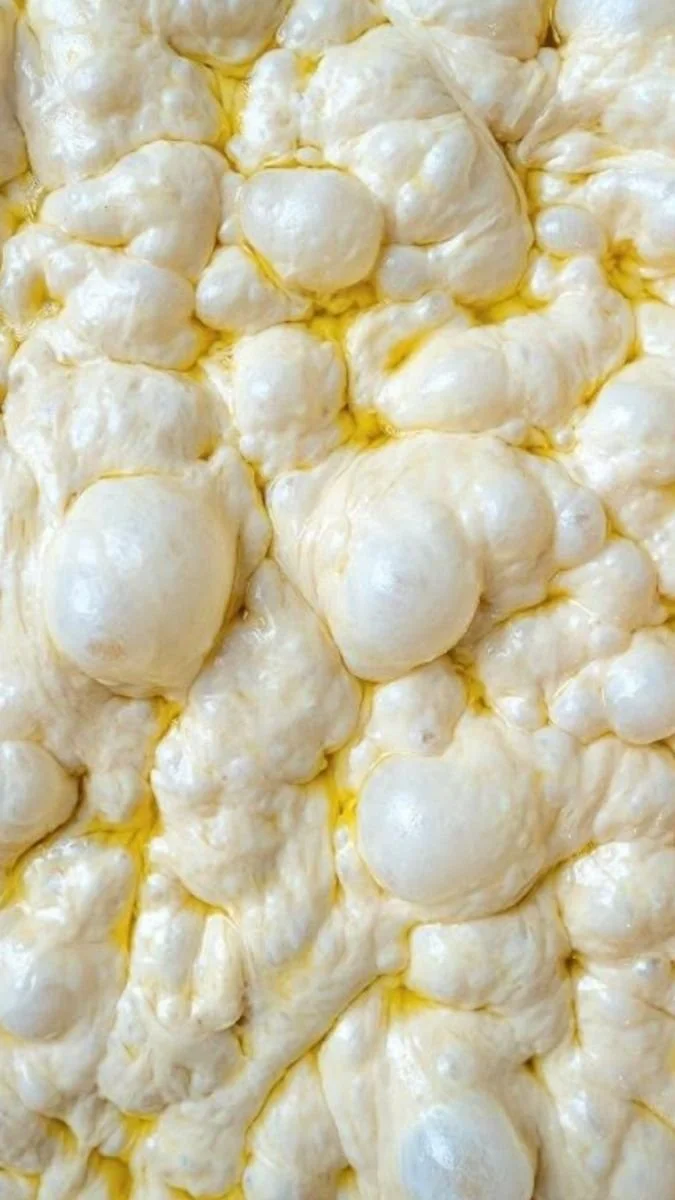
Look at the dough rather than the clock. You want to see volume, softness and bubbles developing beneath the surface.
To make it ahead: after completing the folds, cover the bowl and refrigerate overnight. The following day, remove it from the refrigerator and allow it to come back toward room temperature before continuing.
4. Prepare the pan, you can use either a pan with edges to create a loaf form focaccia, or free form with just a flat baking tray.
Generously coat a 23 × 33 cm / 9 × 13-inch baking pan with olive oil.
Carefully tip the dough into the pan, trying not to knock out the air you've spent all afternoon creating. Turn it gently once so that both sides are kissed with olive oil.
Using your fingertips, encourage the dough toward the edges of the pan.
If it springs back, don't fight it. Leave it alone for 10–15 minutes, then return and gently stretch it again.
Cover and leave to proof for approximately 45–60 minutes, until beautifully relaxed, pillowy and bubbly.
5. Dimple
Preheat the oven to 230°C / 450°F.
Pour a generous amount of extra virgin olive oil over the surface.
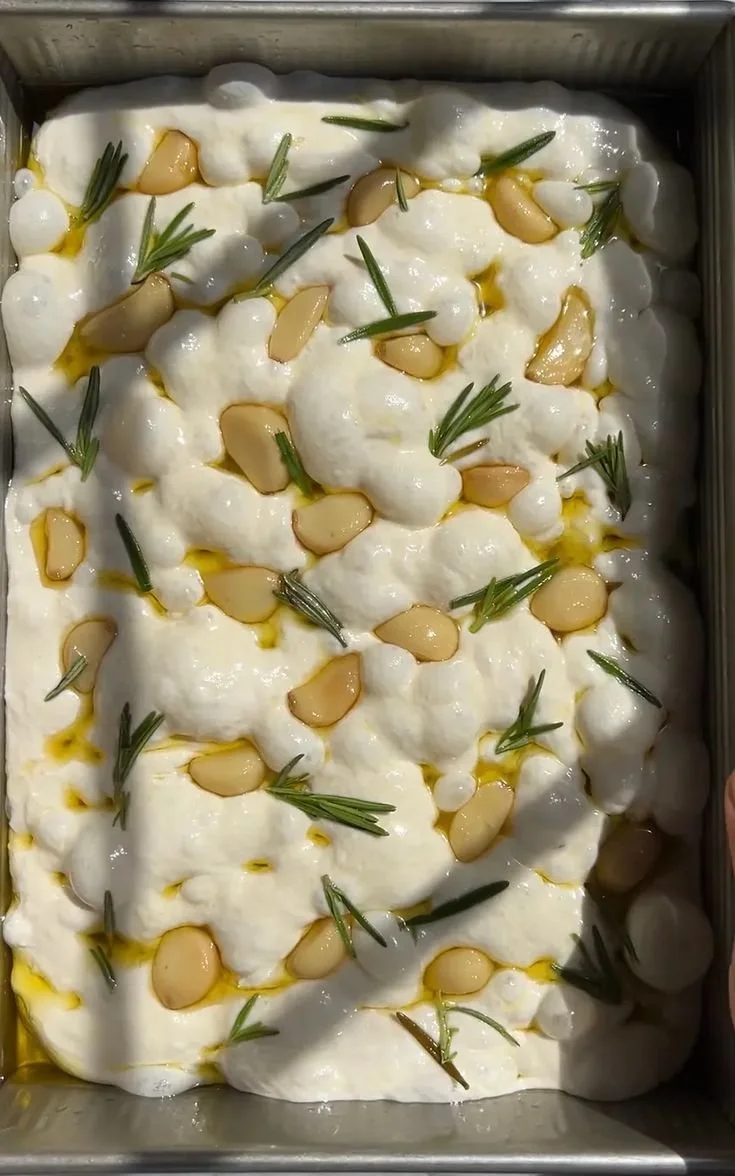
Coat your fingertips in the oil and press them deeply into the dough, all the way toward the bottom of the pan. Don't be shy here — you want deep pockets for the olive oil to settle into.
Scatter generously with fresh rosemary and flaky sea salt.
6. Bake
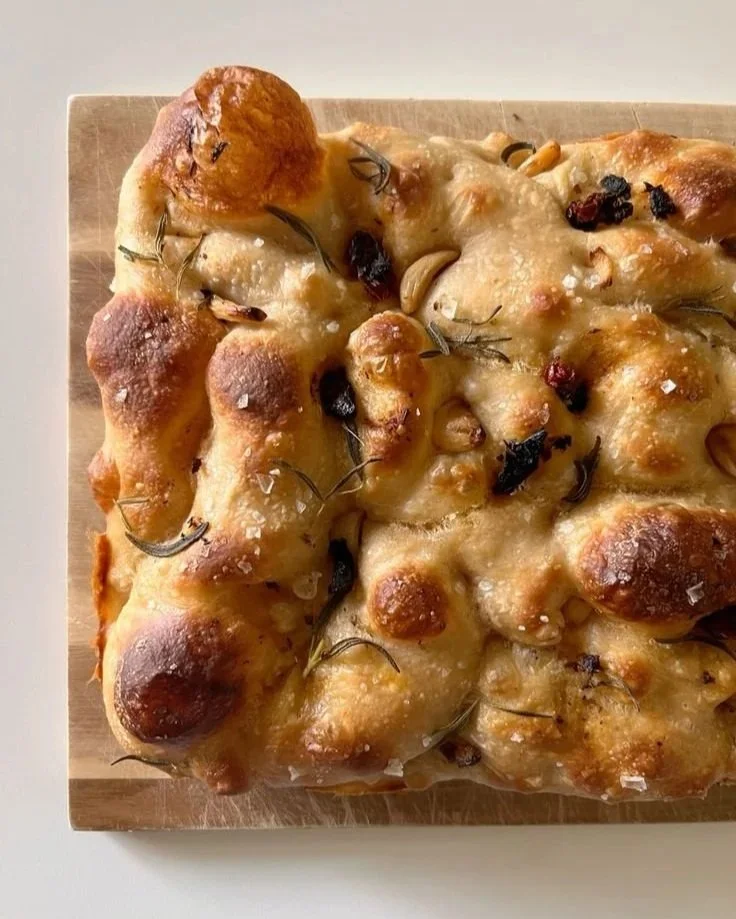
Bake for 20–25 minutes, until deeply golden on top with beautifully crisp edges.
As soon as the focaccia comes from the oven, drizzle it again with extra virgin olive oil, allowing the oil to soak into the hot bread.
Leave to rest for 10–15 minutes before removing from the pan.
Serve warm or at room temperature with a shallow dish of Soleá Ritual extra virgin olive oil for dipping.
Tear. Dip. Share.
CHEF'S NOTE
This dough begins at 75% hydration, which makes it soft and airy while still being approachable to work with.
Resist the temptation to add flour when it sticks to your hands. Wet your hands instead. Wet them again before every round of folds. The small amount of water introduced along the way becomes part of the dough while your folds gradually build its strength.
Bread dough doesn't need to be complicated. Learn how the dough should look and feel, and eventually you'll stop watching the clock quite so closely.
ONE DOUGH, MORE THAN ONE RITUAL
Once you're comfortable making this dough, don't stop at focaccia.
For pizza, use the same dough and fermentation method, then divide and shape it rather than transferring it to the focaccia pan.
For sourdough, the same hand-mixing and folding technique can be used with an active sourdough starter in place of commercial yeast, with the flour and water adjusted accordingly.
It's less about learning one recipe and more about learning how dough behaves in your hands.
To Serve — The Ritual Moment
Slice or tear generously.
Dip into a generous amount of olive oil and sea salt.
Drizzle with honey and chili infused olive oil.
Eat slowly.